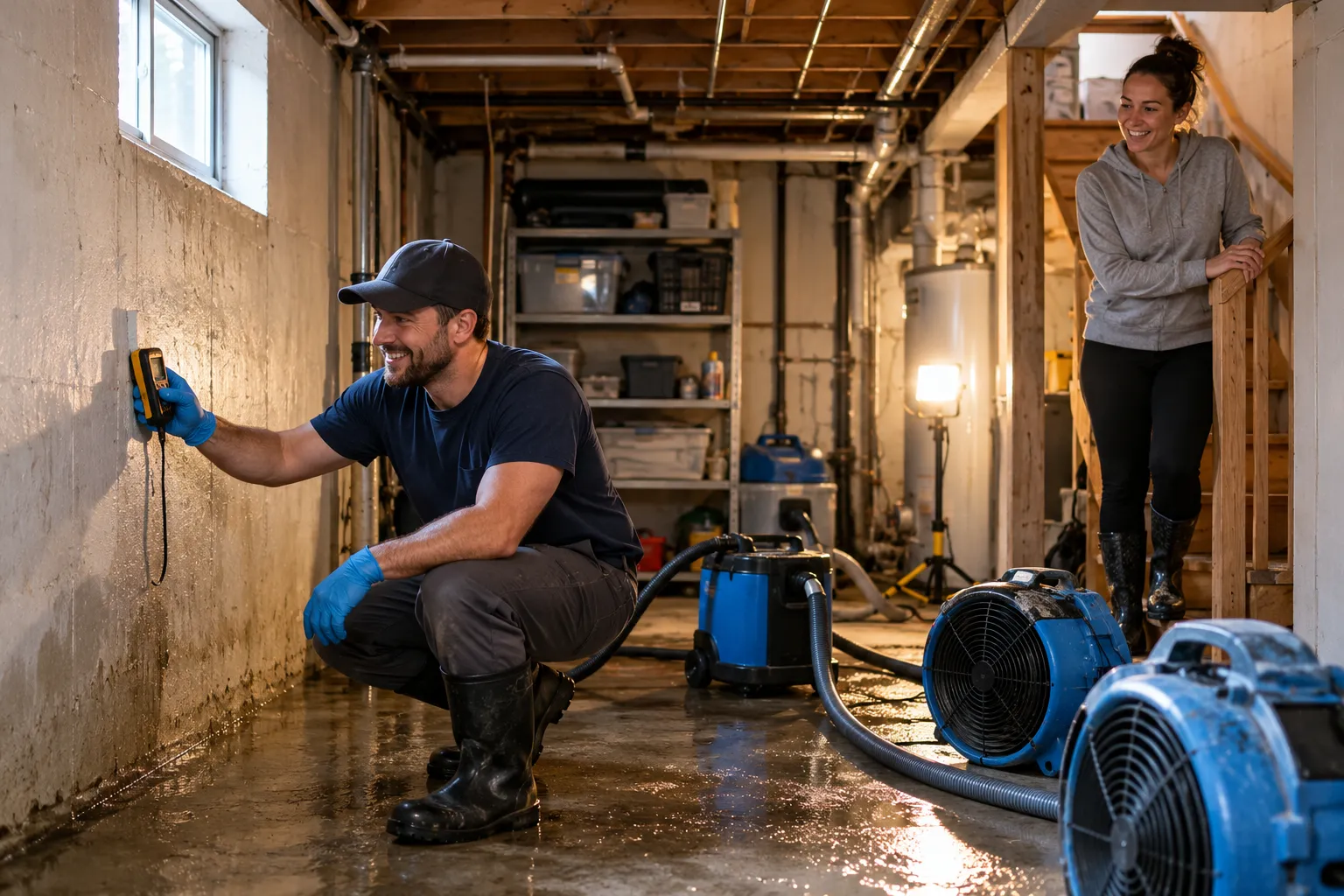
Water in the basement leaves you with fast decisions and a lot of unknowns. How deep is it? Is it safe? What will the cleanup cost? This page walks through those questions in plain words, starting with safety and moving toward the details that shape a price.
Rollingcooperation Restoration is a referral service. It connects homeowners in the Greater Nashville area with independent local providers who handle pumping, cleanup, drying and repairs. Rollingcooperation Restoration does not do the work itself. Our advice is simple: talk to a provider, compare written quotes, and Get it in writing before any work begins.
Flooded basement? Start with safety
Standing water can hide real hazards. Take a minute to look before you step in.
Keep clear of power and appliances
Water and electricity do not mix. If water has reached outlets, the panel or a furnace, stay out. Ask your utility or a licensed electrician to make the area safe first. Do not run a standard vacuum on wet floors.
Know what kind of water you have
Clean water from a broken supply line is a different job than storm runoff or a sewer backup. Dark or smelly water can carry germs. Wear boots and gloves, and treat unknown water as unsafe. Providers sort water into categories, and the category shapes both the safety steps and the price.
Find out where the water came from
A basement floods for a few common reasons:
- Heavy thunderstorm rain pushing in through walls or window wells
- A sump pump that quit or could not keep up
- A burst pipe or failed water heater
- A backed-up floor drain or sewer line
Fix the source, or the cleanup may simply repeat. Take photos and notes as you go. A provider can often help document damage for a claim.
Why a flooded basement needs a fast plan
Wet drywall, carpet and wood hold water like a sponge. In hot, humid weather, mold can start to grow in a couple of days. Many providers can respond quickly, but availability varies, so ask early.
Request a callback to check provider availability in your area.
What flooded basement cleanup includes
The exact steps depend on the job. Most cleanups follow this path:
- Pumping out standing water
- Removing soaked carpet, pad and damaged drywall
- Cleaning and sanitizing hard surfaces
- Setting fans and dehumidifiers to dry what remains
- Checking moisture levels before anything is rebuilt
Extraction and drying equipment have their own pages. Here, the focus is the whole basement job from first look to final check.
Know the price drivers
Two basements with the same amount of water can get very different quotes. These factors move the number most.
Depth and floor area
More water and more square feet mean more pumping, more material to remove and more drying time.
Water category
Clean water costs less to handle than contaminated water. Sewage jobs need extra protective steps and disposal.
How the basement is finished
Bare concrete is simple to dry. Paneling, insulation, carpet and built-in cabinets add labor and removal costs.
Equipment days and access
Drying can take several days. Tight stairs, a crawl-space connection or a long hose run can add time.
Finished vs. unfinished basements
An unfinished basement often dries faster. The slab and block walls tolerate water better, and there is less to tear out. A finished basement is trickier. Water can sit behind walls and under flooring where you cannot see it. Providers may cut small openings to check, and that is normal. Expect a higher range when finishes are involved, especially in older mill-era houses with added rooms.
How the seasons change the timing
Summer heat and humidity slow drying and speed mold. Thunderstorms and the remnants of tropical systems can flood many homes at once, so providers may get busy and schedules can stretch. An ice storm or winter thaw can cause power loss, which stops sump pumps. If you can, make a plan before storm season: test your pump, clear gutters and know who to contact.
After the cleanup
Once the basement is dry, a provider may check moisture readings and look for lingering odor. Rebuilding is often a separate step, and it may be a separate quote. Ask whether the cleanup quote includes new drywall, flooring or paint, or stops at dry and clean. Dry it right first, then rebuild.
What to do with your belongings
Sort items into three piles: keep, clean and toss. Hard items like plastic bins and metal tools can often be cleaned. Porous items such as mattresses, carpet and cardboard are hard to save, especially after contaminated water. Photograph everything before you discard it. Some policies may cover sudden damage, so check your policy and ask your insurer what they need.
Questions to ask the provider
A few good questions make quotes easier to compare:
- Is the price a fixed amount or an estimate that can change?
- What water category do you expect, and why?
- How many days of drying equipment are included?
- Does the quote cover removal and disposal of damaged materials?
- Is rebuilding included, or priced separately?
- Can you help document the damage for my claim?
Compare quotes before you decide
If you can, gather two or three written quotes. Look at what each one includes, not only the total. A lower number that leaves out drying or disposal may cost more in the end.
What's Included
Standing water pumped out
Providers use pumps to clear water from floors, drains and low corners safely.
Damaged materials removed
Soaked carpet, pad and drywall are cut out and hauled away to prevent mold.
Cleaning and sanitizing
Floors, walls and surfaces are cleaned, with extra steps if the water was contaminated.
Drying checks
Fans and dehumidifiers run until moisture readings look normal again.
Typical flooded basement cleanup costs
These are typical U.S. ranges only. Your price depends on water depth, size, water type and finishes. Always get a written quote before work starts.
| Item | Typical range | Notes |
|---|---|---|
| Water pump-out | $300 – $1,500 | Depends on depth and square footage |
| Carpet and pad removal | $500 – $2,500 | Larger rooms and glued carpet cost more |
| Drywall cut-out and disposal | $1,000 – $4,000 | Based on height of wicking and wall length |
| Drying equipment, several days | $800 – $3,500 | Fans and dehumidifiers, priced by day or job |
| Sewage or contaminated water extra | $2,000 – $7,000 | Added safety steps and disposal |
| Full cleanup, finished basement | $3,000 – $10,000+ | Rebuilding is often a separate quote |
How It Works
Stay safe first
Avoid the water until power is off or safe, and wear boots and gloves if you must enter.
Document the damage with photos
Take photos and notes of the water, damaged items and the likely source.
Contact a local provider
Request a callback to check provider availability, or use the request form.
Compare written quotes
Review what each quote includes, then choose the provider that fits your needs.
Why Call Rollingcooperation Restoration
Written quotes compare easily
A line-by-line quote shows what is included, so you can compare providers fairly.
Fewer surprises
Knowing the price drivers helps you spot gaps before extra charges appear later.
Local providers
Independent providers near you know local homes, soil, storms and typical basement setups.
No pressure
Request an estimate with no obligation, then take time to compare your options.
Other Services
Need flooded basement cleanup in Nashville?
Tell us what happened and where. We will point you to independent local providers so you can compare written quotes, with no obligation.
No obligationFlooded Basement Cleanup FAQ
- How much does flooded basement cleanup cost?
- Typical U.S. jobs run from about $1,000 for a small, clean-water flood to $10,000 or more for a large finished basement or sewage backup. Depth, size, water type and finishes drive the price, so get a written quote.
- Can I clean a flooded basement myself?
- Small clean-water spills may be manageable. Larger floods, contaminated water or wet drywall are risky because of germs, electrical hazards and hidden moisture. A local provider can assess the job and explain the options.
- Will homeowners insurance cover a flooded basement?
- It depends on your policy and the cause. Some policies may cover sudden damage, but many exclude surface flooding. Check your policy, ask your insurer, and ask providers to help document damage for a claim.
Tell us what happened
Tell us what happened and where. We will point you to independent local providers so you can compare written quotes, with no obligation.
No obligation