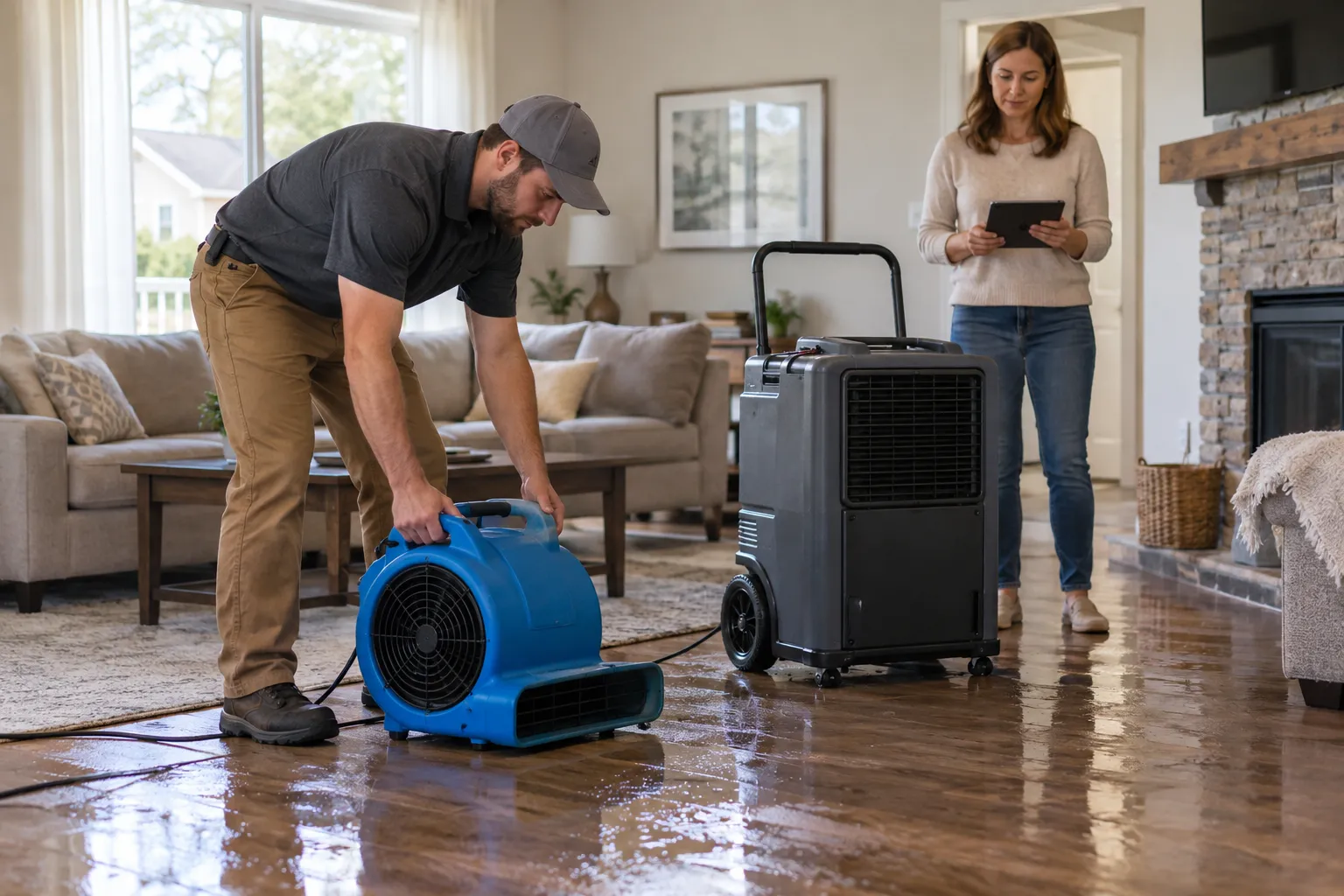
Water extraction removes the standing water from floors, carpet and low spots. Structural drying handles what you can't see: moisture in studs, subfloors, drywall and insulation. Skip the second step and a house can look dry while staying damp inside.
Rollingcooperation Restoration is a referral service. It connects homeowners in the Greater Nashville area with independent local providers who do the work. This page explains how both steps work, what drives the price, and what to put in a written quote. Prices vary a lot by job, so the goal is to help you compare options calmly and ask clear questions before you agree to anything.
Standing water in your home? Start here
When water is pooled on a floor, the first goals are simple. Stop the source. Stay safe. Get the water out. Extraction removes the liquid. Structural drying removes the moisture hiding in wood, drywall and subfloors. You need both.
Request a callback to check provider availability, or use the form to request an estimate.
Safety comes before savings
If you can reach the breaker from a dry spot, turn off power to the wet area. Never wade through water near outlets, cords or appliances. If the water is deep, or you smell gas, leave the house and get help. A repair bill is smaller than an injury.
Why quick extraction protects your budget
Wet materials soak up water fast. The longer they stay wet, the more of them tend to need replacing. Drywall, insulation and carpet padding are usually the first losses. In warm, humid air, mold can start growing in a day or two.
Replacing materials costs more than drying them. That is why speed often protects the budget. Many providers can respond quickly, but availability varies, so ask.
How water extraction works
Providers use pumps for deeper water and wet vacuums for thin layers. Portable or truck-mounted units pull water out of floors and carpet. Sometimes the provider lifts carpet and padding to reach the wet layer below.
Extraction is often priced by the square foot or by hours of labor. Ask which one your quote uses.
Clean, gray and black water
The source changes the price. Water from a broken supply line is the simplest case. Gray water, from a washer or dishwasher, carries some contamination. Black water, from sewage or river flooding, needs protective gear and more removal.
Ask the provider which type they think you have, and why.
How structural drying works
Once the puddles are gone, the building still holds moisture. Providers place air movers to push air across wet surfaces. They add dehumidifiers to pull moisture out of the air. They may remove baseboards or drill small holes to dry wall cavities.
Moisture meters track progress. Dry it right, and the readings should show it.
Equipment days drive the drying bill
Most drying quotes are built from equipment days. Each fan and dehumidifier is usually billed per day. A larger wet area means more units. More units and more days add up fast.
Know the price drivers. Ask for the number of units, the daily rate and the expected number of days, all in writing.
How long does drying take?
Many jobs take about three to five days. A bigger or deeper loss can run longer. Thick materials like hardwood and subfloors release moisture slowly.
Readings, not the calendar, show when drying is done. No honest provider can promise a date before seeing the damage.
Crawl spaces, slabs and older homes
Homes in the Greater Nashville area vary. A crawl space has little airflow, so it can stay damp for a long time. A slab home can trap water under flooring. Older mill-era houses may have plaster, thick framing or layered floors that dry slowly.
Brick and vinyl siding can also hide water behind the wall. Tell the provider what your house is made of. It affects the plan and the price.
How the seasons change the job
Summers here are hot and humid. Damp outdoor air makes drying harder, so equipment may run longer. Thunderstorms and the remnants of tropical systems can send many homeowners looking for help at once, which can stretch schedules.
In winter, ice storms can burst pipes and flood a room while you are away. Planning ahead helps in every season. Know where your shutoff valve is.
What you can do while you wait
Small steps can limit the damage and help with paperwork:
- Photograph and video the water and the damage before moving anything.
- Stop the source, such as a supply valve, if it is safe.
- Lift small items and furniture off wet floors.
- Pull up loose rugs, but leave the heavy work to the provider.
- Keep receipts for anything you buy or pay for.
- Skip the household vacuum on wet floors.
Get it in writing
A good written quote lists the areas covered, the method, the equipment count, the daily rate and the expected days. It should say what is not included, such as removing wet drywall or rebuilding. Compare two or three quotes line by line, not just the bottom number.
Questions to ask the provider
- How will you measure the wet area and track drying?
- How many fans and dehumidifiers do you expect to use?
- What happens to the price if drying takes longer?
- Which materials might need to be removed?
- Will you document the damage for an insurance claim?
Insurance and paperwork
Some policies may cover sudden damage, so check your policy and call your insurer early. Providers can often help document damage for a claim. Coverage depends on your policy and the cause of the water.
Drying is not rebuilding
Extraction and drying get the building dry. Replacing drywall, flooring or trim is a separate job with its own quote. Keep the two apart on paper so you can see what you are paying for.
What's Included
Standing water removal
Pumps and wet vacuums pull water from floors, carpet and low spots so damage stops spreading.
Air movers
Fans push air across wet walls and floors to speed up drying.
Dehumidifiers and monitoring
Equipment lowers humidity in the room while moisture readings show how drying is going.
Hidden moisture checks
Meters help find dampness inside walls, subfloors and cavities that look dry from the surface.
What extraction and drying typically cost
These are typical U.S. ranges and they vary by job. Size, water type, materials and equipment days move the price most. Treat them as a guide and get a written quote.
| Item | Typical range | Notes |
|---|---|---|
| Extraction, small area | $300 – $1,000 | One room, shallow water, priced by size or hours |
| Extraction, larger area | $1,000 – $4,000 | Deeper water or carpet lifting raises the cost |
| Drying equipment | $25 – $150 per unit, per day | Fans cost less; dehumidifiers cost more |
| Complete drying package | $1,200 – $5,000 | Often three to five days of equipment and checks |
| Moisture checks | $100 – $400 | Readings to confirm materials are dry |
| Wet material removal | $500 – $3,000 | Drywall, padding or flooring that cannot be saved |
How It Works
Make the area safe
Stop the source if you can, turn off power to wet areas and photograph everything.
Reach providers
Request a callback to check provider availability or request an estimate online.
Compare written quotes
Look at scope, equipment counts, daily rates and what is left out.
Confirm drying readings
Ask the provider to share moisture readings so you know when drying is truly done.
Why Call Rollingcooperation Restoration
Compare written quotes
Line-by-line quotes from independent providers make it easier to see what you are paying for.
Local providers
Providers in your area know local homes, weather and building styles.
Clear expectations
Know the price drivers before work starts, so a longer job is not a surprise.
No obligation
Requesting an estimate does not commit you to hiring anyone or pay any fee.
Other Services
Need water extraction and structural drying in Nashville?
Tell us what happened and where. We will point you to independent local providers so you can compare written quotes, with no obligation.
No obligationWater Extraction and Structural Drying FAQ
- What is the difference between water extraction and structural drying?
- Extraction removes standing water with pumps and vacuums. Structural drying uses air movers and dehumidifiers to pull moisture out of walls, floors and framing. Most water losses need both steps to finish properly.
- How much does structural drying cost?
- Typical U.S. drying packages run from about $1,200 to $5,000, depending on size, materials and days of equipment. Ask for the unit count and daily rate in a written quote.
- Can I dry my house myself with fans?
- Fans may help with a very small, clean spill. For larger losses, moisture can stay inside walls and subfloors, where mold may grow. A provider can measure it and tell you what is needed.
Tell us what happened
Tell us what happened and where. We will point you to independent local providers so you can compare written quotes, with no obligation.
No obligation