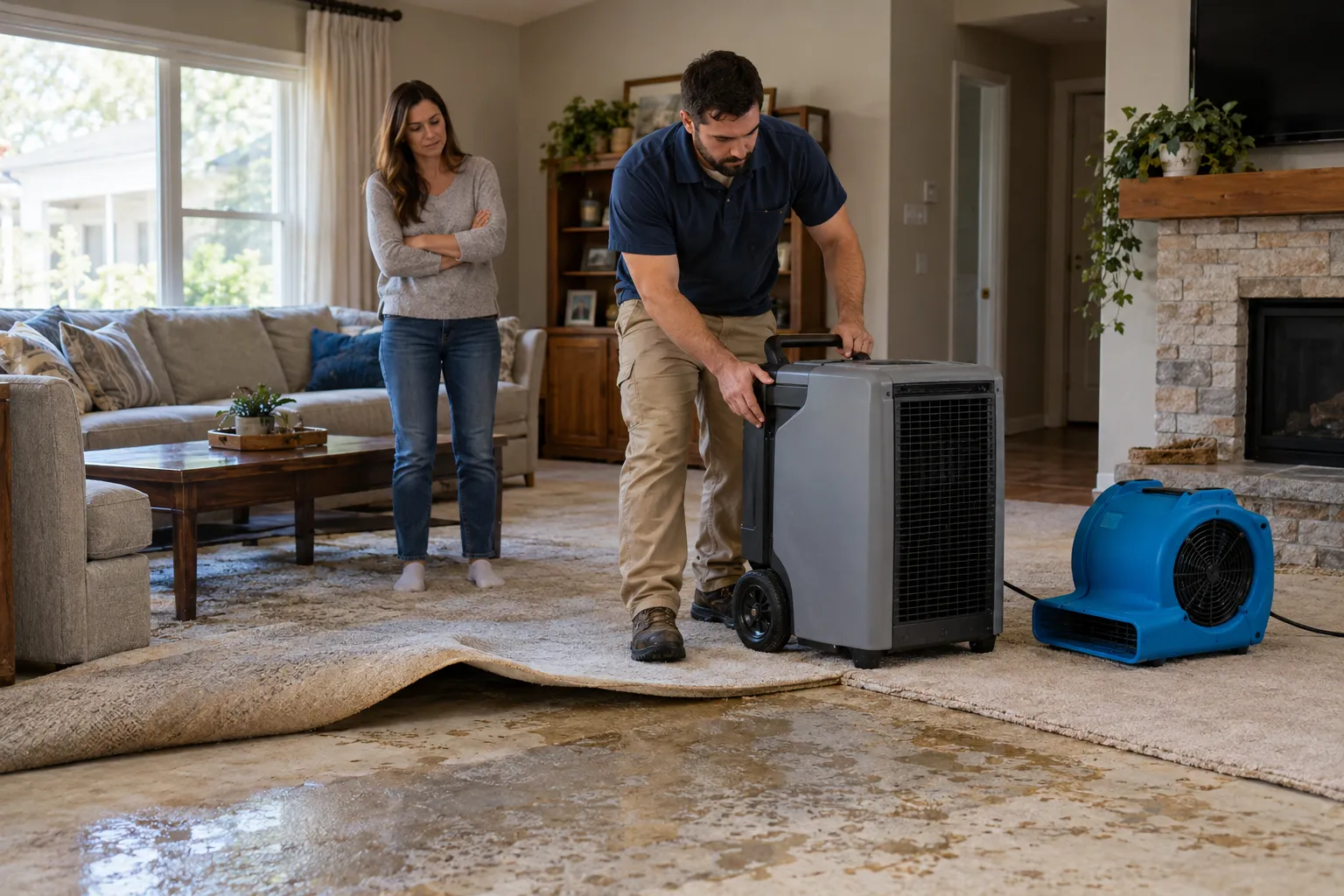
Water damage restoration is the work of stopping the damage, removing water, drying the structure and repairing what could not be saved. Rollingcooperation Restoration is a referral service. It does not do the work. It connects homeowners in the Greater Nashville area with independent local providers who do.
The final price depends on how much water there is, where it came from, how long it sat and which materials got wet. This page explains those price drivers in plain words, shows typical U.S. ranges, and tells you what to look for in a written quote. Use it to compare options calmly, even when the situation feels stressful. Costs vary a lot from one job to the next, so treat every number here as a rough guide and ask each provider for a written quote.
First Steps When Water Gets In
Start with safety. If a pipe burst, shut off the main water valve. If water is near outlets or appliances, stay out and keep power off to that area if you can reach the panel safely. Never wade through standing water if the electric system may be live.
Then take photos and short videos of everything wet. Move small items to dry ground. These steps are simple and help later when you compare quotes or talk to your insurer.
Request a callback to check provider availability in your area, since schedules vary from one provider to the next.
Why Timing Moves the Price
Wet drywall, carpet pad and wood hold moisture long after the surface looks fine. The longer they stay wet, the more of them may need to be torn out instead of dried. Tear-out and rebuilding are the costly parts of a job.
Mold can also begin to grow in warm, damp spaces within a few days. Mold treatment adds a separate line to the bill. Many providers can respond quickly, so ask about timing when you first reach out.
What Restoration Actually Covers
A full job usually has several stages. A provider may do some or all of them:
- Inspect the home and find every wet spot with moisture meters
- Remove standing water
- Take out materials that cannot be saved
- Run dehumidifiers and air movers to dry the structure
- Clean and sanitize affected areas
- Rebuild or repair floors, walls and trim
Not every home needs every stage. A short list on your quote is a good sign. A vague one is not.
Know the Price Drivers
Most bills come down to a handful of factors. Square footage that got wet is the first. Water depth and how far it spread come next. Then come the materials: hardwood and plaster cost more to handle than carpet and basic drywall.
Equipment time matters too. Drying often takes several days, and each machine adds to the total. Access counts as well. Tight crawl spaces and finished basements take more labor.
Finally, rebuilding is often priced apart from drying. Ask whether a quote covers both or only the first part.
Types of Water and Why They Matter
Water is sorted into three broad kinds. Clean water comes from a supply line or a broken pipe. Gray water comes from a washer or dishwasher and has some contamination. Black water comes from sewage or floodwater and is unsafe.
Clean water is usually the least costly to handle. Black water costs more because porous materials often must be removed and the area needs careful cleaning. Clean water can also turn worse if it sits for days.
How Seasons and Weather Play In
Hot, humid summers slow drying because the air already holds moisture. Providers may need extra dehumidifiers, and that can raise the equipment line. Thunderstorms and the remains of tropical systems can bring many calls at once, so schedules may stretch.
Winter brings its own risk. Ice storms can knock out power and freeze pipes, which then burst as they thaw. Planning ahead helps. Know where your main shutoff is before storm season, and keep a few provider options in mind.
Crawl Spaces, Slabs and Older Homes
Crawl-space homes can hide water under the floor for a long time. Providers may need to dry the subfloor and check insulation. Slab homes often leak from lines in or under the concrete, which can make the source harder and costlier to find.
Older mill-era houses may have plaster, old wiring or layered flooring. Those details can change the scope. Newer subdivisions often use drywall and engineered flooring, which can need replacing sooner if soaked.
Working With Your Insurance
Some policies may cover sudden damage, such as a burst pipe, but not slow leaks or flooding from outside. Check your policy and contact your agent early. Coverage depends on your exact terms.
Providers can often help document damage for a claim. Ask for itemized notes, photos and moisture readings. Keep every receipt.
Get It in Writing: Comparing Quotes
Try to collect at least two or three written quotes. Do not compare totals alone. Compare what each one includes.
A useful quote lists the rooms, the work in each stage, the equipment and how long it will run, and what happens if the scope changes. It should also state whether rebuilding is included. A low number with a short scope can cost more once extras are added.
Beware of any provider who asks for full payment up front or won't put anything on paper.
Questions Worth Asking a Provider
- Is the quote itemized by room and task?
- How will you measure that the structure is dry?
- Who handles rebuilding, and is it priced separately?
- Can you help document the loss for my insurer?
- What could change the price once work starts?
Choosing a Provider You Are Comfortable With
Rollingcooperation Restoration connects you with independent providers. It does not do the work, and it does not endorse any one company. Ask each provider about their own licensing, insurance and experience, and verify what they tell you.
Pick the one whose quote is clear, whose answers are direct and whose schedule fits your home.
Getting Your Home Back to Normal
Dry it right before you rebuild. Ask for final moisture readings in writing before walls close up. Then plan repairs, paint and flooring. Keep your photos, quotes and invoices together in one folder. They help with claims, resale and any future problems.
Request a callback to talk through your options and check which providers are available near you.
What's Included
Moisture Inspection
A provider checks walls, floors and subfloors with meters to find hidden wet spots before work is priced.
Water Removal
Pumps and vacuums pull standing water out so drying can begin in earnest.
Structural Drying
Dehumidifiers and air movers dry framing, subfloors and walls, usually over several days.
Cleaning and Repairs
Affected areas are cleaned and sanitized, then damaged drywall, flooring and trim are rebuilt or replaced.
Typical Water Damage Restoration Costs
These are typical U.S. ranges. Real prices vary by job size, water type, materials and local rates. Treat them as a planning guide, and always get a written quote before work begins.
| Item | Typical range | Notes |
|---|---|---|
| Moisture inspection | $200 – $600 | Often folded into the full quote |
| Small clean-water cleanup, one room | $500 – $2,500 | Quick catch keeps it small |
| Drying equipment, 3–5 days | $800 – $3,000 | Humid weather can add days |
| Multi-room loss, extraction and drying | $2,500 – $7,500 | Depends on square footage |
| Gray or black water cleanup | $3,000 – $10,000+ | More removal and sanitizing |
| Rebuild: drywall, insulation, flooring | $1,000 – $8,000 | Often priced separately |
How It Works
Make It Safe
Shut off the water source, avoid live electric areas and take photos of all damage.
Reach Out for Quotes
Request a callback or request an estimate to connect with local providers.
Compare the Written Quotes
Check scope, equipment, drying goals and rebuild details side by side.
Dry, Then Repair
The provider dries the structure, confirms readings and then rebuilds what was lost.
Why Call Rollingcooperation Restoration
Clear Pricing
We explain the price drivers so you can read a quote and spot what is missing.
Local Providers
You are matched with independent providers who serve homes across the Greater Nashville area.
Quote Comparison
We encourage getting it in writing and comparing scope, not just totals.
No Obligation
Request an estimate, ask questions and decide at your own pace.
Other Services
Need water damage restoration in Nashville?
Tell us what happened and where. We will point you to independent local providers so you can compare written quotes, with no obligation.
No obligationWater Damage Restoration FAQ
- How much does water damage restoration cost?
- Small cleanups often run a few hundred to a few thousand dollars in the U.S. Larger or contaminated losses can reach well past $10,000. Get a written quote, since each job differs.
- Does homeowners insurance cover water damage?
- Some policies may cover sudden damage, like a burst pipe, but often exclude slow leaks and outside flooding. Read your policy and talk to your agent before work starts.
- How long does it take to dry a house after water damage?
- Drying often takes about three to five days, but humid weather or deep saturation can add more. The provider should confirm dryness with moisture readings.
Tell us what happened
Tell us what happened and where. We will point you to independent local providers so you can compare written quotes, with no obligation.
No obligation